
 Greek
 Guardian
 Hunter
 Warrior
Aspects
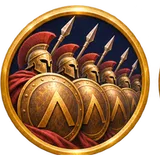
Phalanx
Gains a 320 / 450 / 650 shield and grants adjacent allies 15 / 20 / 30 armor for 5s.
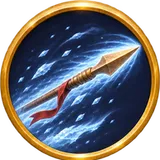
Javelin
Throws a javelin at the farthest enemy for 1.7 / 1.8 / 2× attack damage and Chills it for 2s.
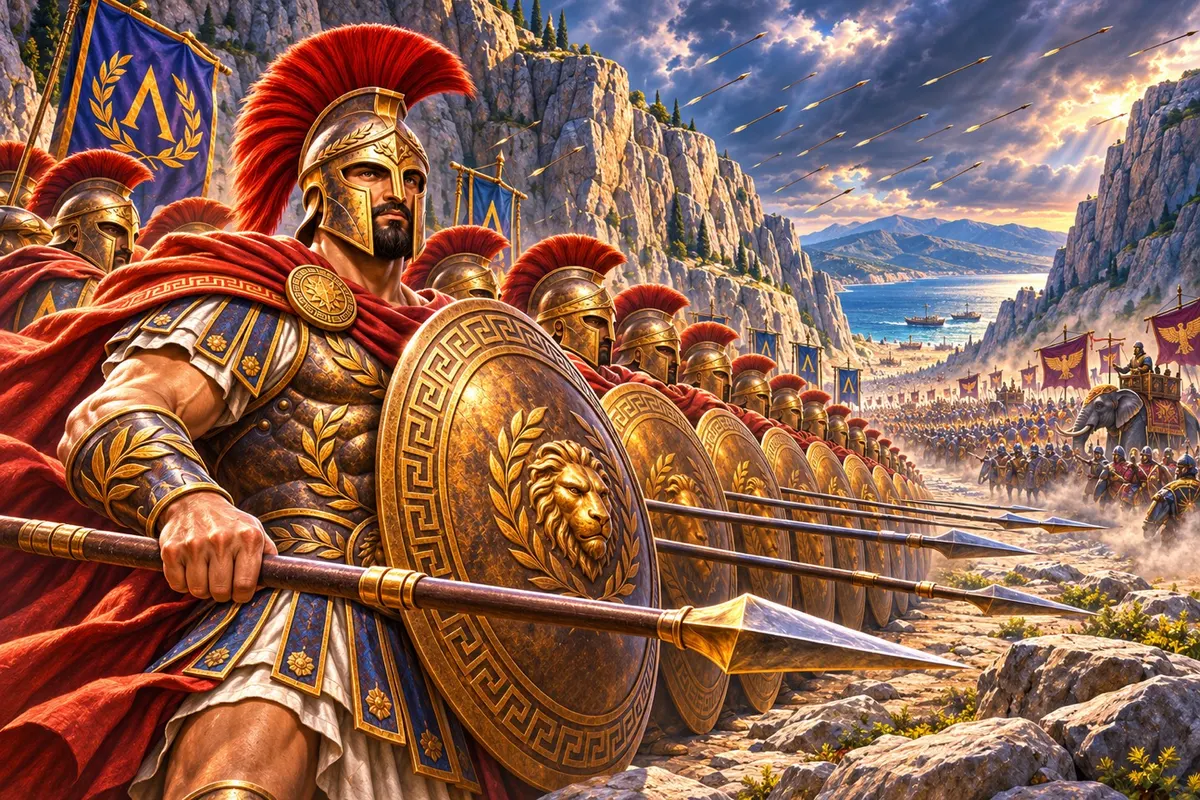
The tale of the hoplites
The heroes of the old myths fought alone: Achilles, Heracles, Perseus. But the soldiers who actually won Greece's wars fought together. They were the hoplites, the citizen soldiers of the Greek city-states, and their way of fighting shaped the whole history of Greece.
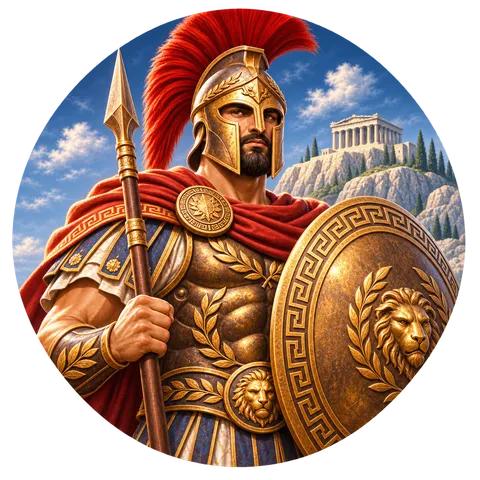
A hoplite was not a professional soldier or a king's servant. He was a farmer, a craftsman, a merchant: a free citizen of his city, who bought his own armour and answered the call when his city went to war. His most important weapon was his hoplon, a great round shield of wood faced with bronze, almost a metre across. He also carried a long spear, a short sword, a bronze helmet, often with a crest of horsehair, a breastplate and bronze greaves on his shins.
The phalanx
The hoplites fought in the phalanx: a wall of men, eight or more rows deep, standing shoulder to shoulder. Each man held his shield on his left arm, and it covered not only himself but also the right side of the man beside him. So every hoplite depended on his neighbour, and his neighbour depended on him. A man who ran away did not only save himself; he opened a hole in the wall that could get everyone killed. That is why the greatest shame for a Spartan was to come home without his shield. A Spartan mother was said to tell her son: Come back with your shield, or on it.
Marathon and Thermopylae
In 490 BC a Persian army landed at Marathon, near Athens. The Athenian hoplites, heavily outnumbered, ran at the Persians across the plain and won. The messenger Pheidippides, legend says, ran all the way to Athens to announce the victory, and dropped dead after delivering it. That run inspired the modern marathon race.
Ten years later, at the narrow pass of Thermopylae, King Leonidas and his 300 Spartans, with a few thousand other Greeks, held back the vast army of King Xerxes for three days. When the Persians demanded that they lay down their weapons, Leonidas answered with two words: Molon labe, "Come and take them."
Hoplite in Battle of Myths
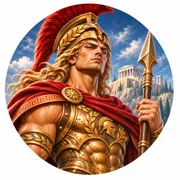
The Hoplite is a cost 1 Greek hero with two aspects. In the Phalanx (guardian) he locks his shield, gaining a shield and giving armor to every ally beside him. As a Peltast (hunter and warrior) he throws a Javelin at the farthest enemy, chilling it. As his quote says: his shield covers the man beside him, and that is the whole of their philosophy. With every Greek hero he shares Glory: whenever an enemy falls, the Greeks grow stronger and heal.
Did you know?
- The word hoplite comes from hoplon, the Greek word for a piece of equipment, and especially the shield.
- Peltasts were light soldiers named after their small crescent shield, the pelte, who fought by throwing javelins.






 Be there at launch

One email when Battle of Myths reaches the App Store and Google Play. Nothing else.
On Android? Join the Android beta and play now. We use your email only for this, see privacy.